The Bees of Magee Meadow
Thirty-two hives. Millions of tiny co-workers. And we couldn't be more grateful for every single one of them.
Life in the Hive Yard
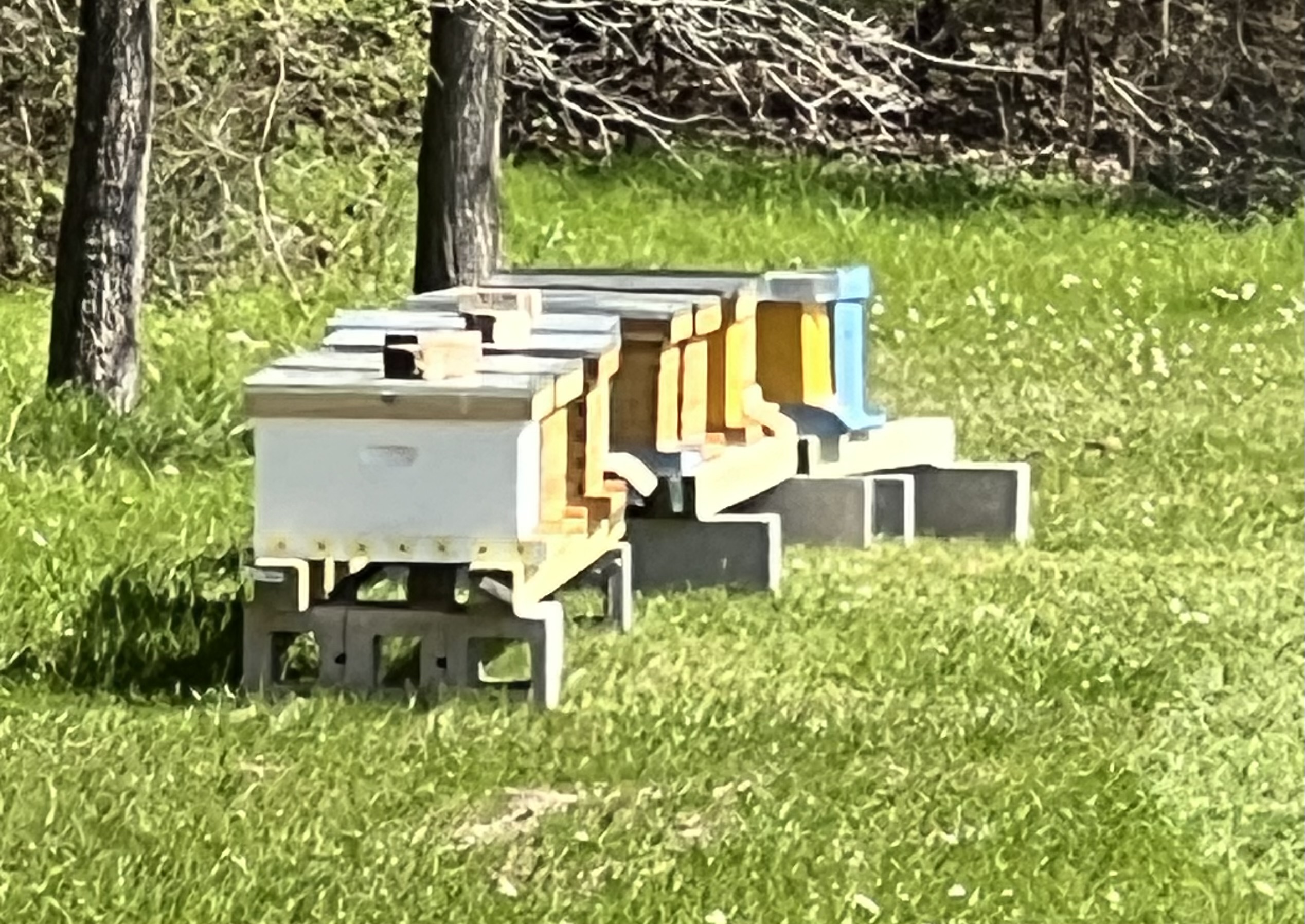
Our bees live in Langstroth hives arranged in yards across our East Texas property. Each hive has its own name, its own personality, and its own queen — the heart of the whole operation.
We practice low-intervention, treatment-mindful beekeeping. We monitor for varroa religiously, prioritize natural comb building, and raise queens from our best-performing, gentlest colonies. Our bees are East Texas bees — they know how to handle our summers, they know the flowers, and they know how to make exceptional honey.
We're currently managing 32 active hives and expanding every season. Our goal is to raise bees that are resilient, gentle, and well-suited for both honey production and pollination work in East Texas.
A Few Things That Blow Our Minds Every Single Time
A Lifetime of Work
A single worker bee produces only 1/12 of a teaspoon of honey in her entire lifetime. Your jar of honey represents the combined effort of thousands of bees flying millions of miles.
All About the Queen
A healthy queen can lay up to 2,000 eggs per day — more than her own body weight. She can live 3–5 years, while a worker bee lives only 6 weeks in summer.
The Waggle Dance
Honeybees communicate the location of flowers through a complex figure-eight waggle dance. The angle and duration of the dance precisely codes direction and distance from the hive.
Perfect Temperature
Bees maintain the brood nest at exactly 95°F (35°C) year-round — warmer than your home thermostat. They fan their wings in summer and cluster tightly in winter to stay there.
Honey Never Spoils
Archaeologists have found 3,000-year-old honey in Egyptian tombs — still perfectly edible. Honey's low moisture and natural acidity make it essentially shelf-stable forever.
Pollination Power
One-third of the food we eat exists because of bee pollination. Almonds, blueberries, avocados, squash — bees make the food world go round.
Colony by the Numbers
A healthy hive at peak summer may hold 60,000–80,000 bees. That's more individuals than many towns, all working in near-perfect coordination with no manager in sight.
Home Sweet Hive
Bees will fly up to 5 miles from the hive in search of nectar and pollen, but they prefer to forage closer. A well-situated apiary with diverse local forage is a happy apiary.
10,000 Years Together
Humans have been keeping bees for at least 10,000 years. Rock art in Spain shows humans collecting honey from wild hives — making beekeeping one of the world's oldest agricultural practices.
Our Beekeeping Philosophy
We're not hands-off beekeepers. We're hands-on beekeepers who respect what we're working with.
Varroa Management First
Varroa destructor mite is the single greatest threat to managed bee colonies in the US. We monitor mite loads with alcohol washes regularly and treat when thresholds are crossed, using the most colony-friendly methods available.
Local Queen Genetics
We raise queens from our own best colonies — the ones that overwinter well, build up fast, and show gentle temperaments. Local genetics matter. Our bees know East Texas.
Regular Hive Inspections
We open every hive and evaluate brood pattern, population health, honey stores, and queen status on a regular inspection schedule. You can't manage what you don't observe.
Forage & Environment
We actively plant and maintain forage around our apiary — native wildflowers, fruit trees, and pollinator-friendly plants that provide nutrition well beyond the main nectar flows.
Want Bees of Your Own?
We sell nucleus colonies and queens seasonally. Whether you're just starting out or adding to an established apiary, we'd love to help you get your bees.