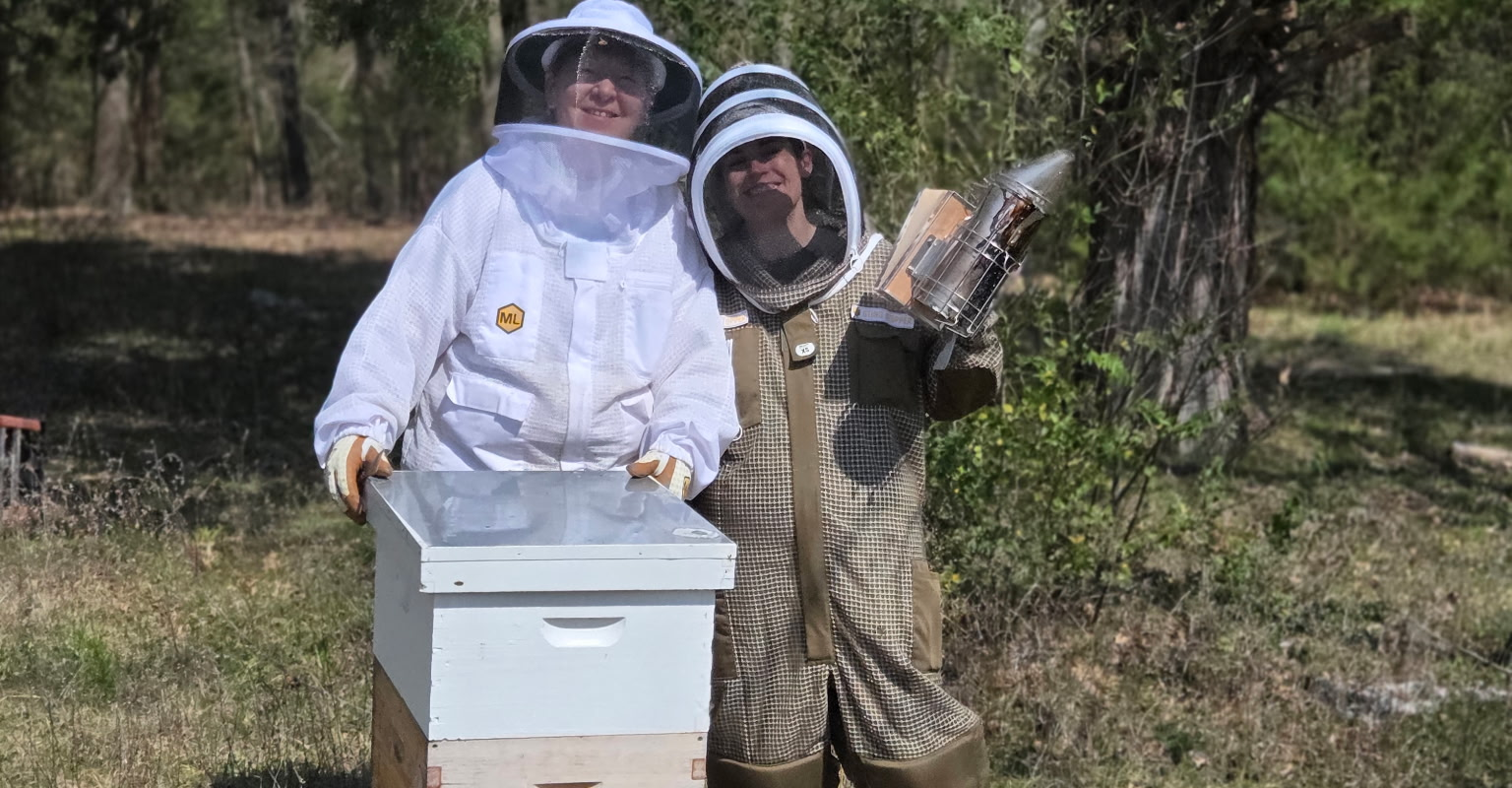
There is something quietly radical about a woman standing in a field, veil on, smoker in hand, tending to tens of thousands of bees like she has always belonged there — because she has.
Women have been keeping bees for centuries. And yet, if you have ever walked into a beekeeping club meeting or scrolled through a beekeeping forum, you might have noticed something: it can still feel like a room built for someone else. If you have felt out of place, talked over, or like you had something to prove just by showing up — you are not alone, and you are not wrong for noticing it.
Here at Magee Meadow Apiary, we believe the apiary belongs to anyone with the curiosity and the grit to tend it. So let’s have an honest conversation about the real challenges women face in beekeeping — and more importantly, how we can lift each other right over them.
The Weight of the Boxes (And We Mean That Literally)
Let’s start with the most physical challenge, because it is the one nobody warns you about before your first hive inspection. A full Langstroth deep super — the big box on the bottom of a standard hive — can weigh anywhere from 60 to 100 pounds when it’s packed with honey. A medium super isn’t much better, often hitting 50 to 60 pounds. For many women, that is simply a lot to manage alone, especially in the heat of summer, wearing layers of protective gear.
This is not a weakness — it is physics. And the good news is, beekeepers have been solving this problem for years with some very practical tools:
Use medium supers instead of deeps for honey storage. They hold less honey per box, but they weigh significantly less when full. Many experienced beekeepers exclusively use mediums for exactly this reason.
Invest in a hive tool caddy or a small rolling cart. Moving equipment around the apiary doesn’t have to mean hauling it by hand every time.Consider top-bar hives. These horizontal hives were designed to eliminate the need to lift heavy boxes altogether. You work one bar at a time, which is much more manageable.
A hive stand at the right height makes inspections easier on your back and gives you better leverage when you do need to move boxes.
Buddy up. There is no shame in having an inspection partner. In fact, most experienced beekeepers will tell you two sets of eyes on a hive is always better than one. Besides, sharing this with others makes it even more rewarding.
“Are You Sure You Know What You’re Doing?”
If a man and a woman both walk up to a hive at a beekeeping event, research — and the lived experience of countless women beekeepers — suggests the man is more likely to be asked for his opinion first. This kind of assumption runs deep in agriculture, and beekeeping is no exception.
As one beekeeper put it plainly: “There is often an incorrect assumption that we all have a man behind the scenes doing the heavy lifting. We must work harder to be taken seriously in the ‘bee world.'” Another noted that even though the entire bee colony is run by a queen, beekeeping has historically been seen as a man’s job.
It is worth saying out loud: this perception is not a reflection of your knowledge or your skill. It is a bias, and biases can be changed — especially when more women show up, speak up, and share their stories. Every time a woman teaches a class, runs a demonstration, or simply answers a question confidently at a club meeting, she is quietly rewriting the story of who belongs here.
Finding Your Place in the Club
Local beekeeping associations are wonderful resources — but they have not always been welcoming spaces for women. Research from the University of Nebraska found that some women reported being unable to hold certain board positions in their beekeeping associations simply because of their gender, and that some clubs in the United States still limit women’s leadership roles today.
One beekeeper described attempting to join a local club and finding “just a good handful of middle-aged men” — no one who looked like her. That kind of experience can make it feel like beekeeping isn’t for you when really, the club just hasn’t caught up yet.
Here’s the thing, though: that is changing, and women are the ones changing it. If your local club doesn’t feel like a fit, look for women-centered beekeeping communities — online groups, regional networks, and organizations like the Women’s Beekeeping Collective are growing and thriving. You might also consider becoming the person at your local club who makes the next woman who walks in feel like she belongs. That ripple effect is powerful.
Equipment That Wasn’t Designed With You in Mind
Here’s a frustration you might not have expected: a lot of beekeeping gear was simply not designed with women’s bodies in mind. Traditional beekeeping suits are often cut for a male frame, which means veils that gap at the neck, gloves that are too wide in the palm, and jackets that don’t account for curves. A poor-fitting suit isn’t just uncomfortable — it can be a safety issue if it allows bees to find their way in.
The good news here is that the market has genuinely improved in recent years. Several companies now make suits and gear specifically designed for women. It’s worth the investment to find gear that truly fits — your comfort and confidence in the apiary depend on it. When you feel secure in your equipment, you can focus on what matters: your bees.
Balancing the Hive and Everything Else
Let’s be real — many of us are already juggling careers, families, and a long list of other responsibilities before we even pull on our veils. Beekeeping asks for your attention at specific times throughout the season, and those windows don’t always line up neatly with everything else on your plate.
A few things that help:
Keep a simple seasonal calendar. Knowing in advance when your hives will need the most attention (early spring build-up, honey harvest, fall prep) makes it much easier to plan around.
Start small. One or two hives in your first season is plenty. There is wisdom in growing slowly.
Lean on your beekeeping community for mentorship. Having someone you can call when something looks off in the hive saves hours of worry and guesswork.
The Sweetest Solution: Each Other
Here is what we know to be true at Magee Meadow Apiary: the single best thing that has happened for women in beekeeping is women supporting women in beekeeping. It really is that simple.
When a more experienced beekeeper takes the time to mentor a beginner, both of them grow. When women share their failures as openly as their successes, they give each other permission to learn without shame. When we cheer for each other’s honey harvests and show up for each other’s questions — even the ones that feel embarrassingly basic — we build something that no beekeeping manual can teach.
You don’t have to have years of experience to be a resource for another woman. Knowing what to expect your first spring is worth sharing. Knowing which local supplier is kind to new beekeepers is worth sharing. Knowing that the fear fades after a few inspections — that is absolutely worth sharing.
A Note From Our Apiary
If you are a woman who is curious about beekeeping, just getting started, or already deep into your beekeeping journey — we see you, we celebrate you, and we want to hear your story. Drop a comment below and tell us: what’s been your biggest challenge, and what’s been your greatest joy? This community is built one beekeeper at a time, and we are so glad you’re here.
With warm regards and a little honey on the side,
Magee Meadow Apiary 🍯